This year was grounded in precise design, practical infrastructure, and energy-smart retrofits. Through dozens of site visits, planning sessions, and operational audits, our team continued to push greenhouse thinking beyond basic enclosures toward resilient systems built for decades of performance.
From advanced climate control systems at land-grant universities to post-storm reconstruction in the Southeast, LLK took on some of our most ambitious work to date. We’ve highlighted five standout projects from 2025 that showcase the spectrum of challenges and innovations we’re tackling: biosecurity-first design, precision environmental controls, durable infrastructure, long-term institutional planning, and more.
Client feedback from our project at the University of Minnesota – St. Paul affirmed our approach. As Ben Clasen, Plant Growth Facility Manager at UMN, shared:
“The team at LLK was professional, thoughtful, and highly efficient. They successfully executed a complex greenhouse control system upgrade for us in less than one week. I am extremely pleased with the positive outcome and am excited about the improvements this upgrade offers in terms of precise environmental control and the labor and energy savings it will provide.”
The articles we published throughout the year reflected hard decisions greenhouse operators face daily: What’s worth overbuilding? How do we plan for water challenges we haven’t met yet? What parts are failing quietly in the rafters? And perhaps most importantly: How do we avoid designing ourselves into a corner?
We’ve synthesized the most impactful lessons from our 2025 blog articles, organized by six critical themes we believe define long-term greenhouse success. Whether you’re in planning, operations, or retrofitting mode, these takeaways are grounded in what we’ve seen on the ground — and in what will matter most in the years ahead.
1. Smart Infrastructure Planning: Design with the End in Mind
Whether you’re building new or modernizing an aging facility, every infrastructure decision is a strategic one.
- Plan for adaptability from the start. “It’s cheaper to overbuild infrastructure upfront than to retrofit it later.” Early overbuilding of utility capacity, access space, and water treatment potential creates lasting ROI. Design Playbook
- Compartmentalization is non-negotiable in multi-user research facilities. MSU’s greenhouse overhaul emphasized “separate, individually controlled zones” as essential. MSU Modernization
- Sidewall height impacts everything from air mixing to lighting layout. MSU’s shift from 7’6″ to 13′ walls unlocked LED integration, vertical crops, and mechanization capacity. Sidewall Height
- Even challenging sites can become assets. Petitti’s Bath Township project reengineered a sloped, retention-heavy parcel into a retail showpiece. Petitti Build
2. Heating Systems & Energy Efficiency: Building Smarter for Decades
The focus on heating system longevity and thermal efficiency was a recurring theme across 2025.
- “Most of these greenhouse facilities have an economic life of decades,” so heating design must be fuel-flexible and maintenance-friendly. Future-Proof Heating
- Energy curtains can reduce heating loss by 20–75% and bring “up to 50% on their heating bills.” Energy Curtains
- Don’t forget system insulation: seal glazing edges, insulate ducts, and check for heat leaks. Efficiency Checklist
- Rebates can support smarter HVAC and thermal upgrades — if you “plan for efficiency from the beginning.” Rebate Strategy
3. Built for Biosecurity: Infrastructure That Withstands and Protects
Greenhouse performance isn’t about productivity alone. It’s also about risk mitigation, reliability, and uptime.
- “Testing of all systems…is recommended to help prevent malfunctions that could result in crop loss.” Build a culture of preemptive checks. Risk Management
- Preventative maintenance should be calendarized — not reactive. Kent State’s team does full PM “before spring and again as part of winter prep.” Melissa Davis Interview
- High-mounted, hard-to-reach systems — like polycarbonate panels and fan bearings — hide the biggest failure risks. Hidden Components
- Fall prep includes checking seals under bar caps and lubricating noisy rack-and-pinion gears. Fall Readiness
4. Water Systems: Test, Treat, Reuse with Precision
Water is one of the most technically demanding and misunderstood areas in greenhouse ops.
- “We always start with an honest-to-God water analysis” — don’t skip full water panels (ions, microbes, hardness, TDS). Water Strategies
- RO systems can be game-changing if correctly paired with pretreatment and maintained. Water Strategies
- Reuse demands data: “How much fertilizer is still in your water when you collect it?” Fertigation strategies must adapt. Water Strategies
- Rainwater harvesting and moisture sensors can reduce overwatering and runoff. Efficiency Checklist
5. Efficiency Upgrades: Operational Wins That Compound Over Time
Efficiency is an ongoing discipline across lighting, air, water, and workflow.
- LLK’s 25-point checklist includes thermal curtains, insulation upgrades, precision irrigation, programmable thermostats, and orientation tweaks. Efficiency Checklist
- Fall is the best time to test shade fabrics and lubricate mechanicals: “You’ll really start to hear the noise in progress” if you wait. Fall Readiness
- Rebates can help fund LED retrofits, curtain upgrades, or new controls, but only if tied to a coordinated design plan. Rebate Strategy
6. Innovation & Institutional Partnerships: Accelerating Smarter Greenhouse Systems
LLK continues to partner with institutions reshaping how greenhouse infrastructure serves research, innovation, and commercial viability.
- NC State’s CEA Coalition breaks silos by integrating “engineers, computer scientists, and aerospace experts” into growing. NC State Coalition
- “Letting growers vote on which problems get funded” has kept NC State’s research grounded in real-world application. NC State Coalition
- LLK’s collaboration with MSU demonstrated how to keep a $35M facility operational during phased renovations. MSU Modernization
Designing for What Comes Next
Greenhouse infrastructure shouldn’t be static. It’s the backbone of long-term performance, risk management, and innovation.
In 2025, we focused on helping clients move beyond the short-term: away from lowest-cost decisions, and toward smarter, adaptable systems that pay dividends over time.
Whether you’re expanding a research hub, overhauling legacy systems, or breaking ground on a next-generation grower facility, the lessons from 2025 reinforce one message: The smartest operators start with the end in mind.
And the smartest infrastructure isn’t just built — it’s planned, tested, maintained, and ready for what’s next.
—
Top 5 Greenhouse Projects of 2025
A few highlights from what we delivered on the ground this year.
1. Michigan State University: Designing for Decades
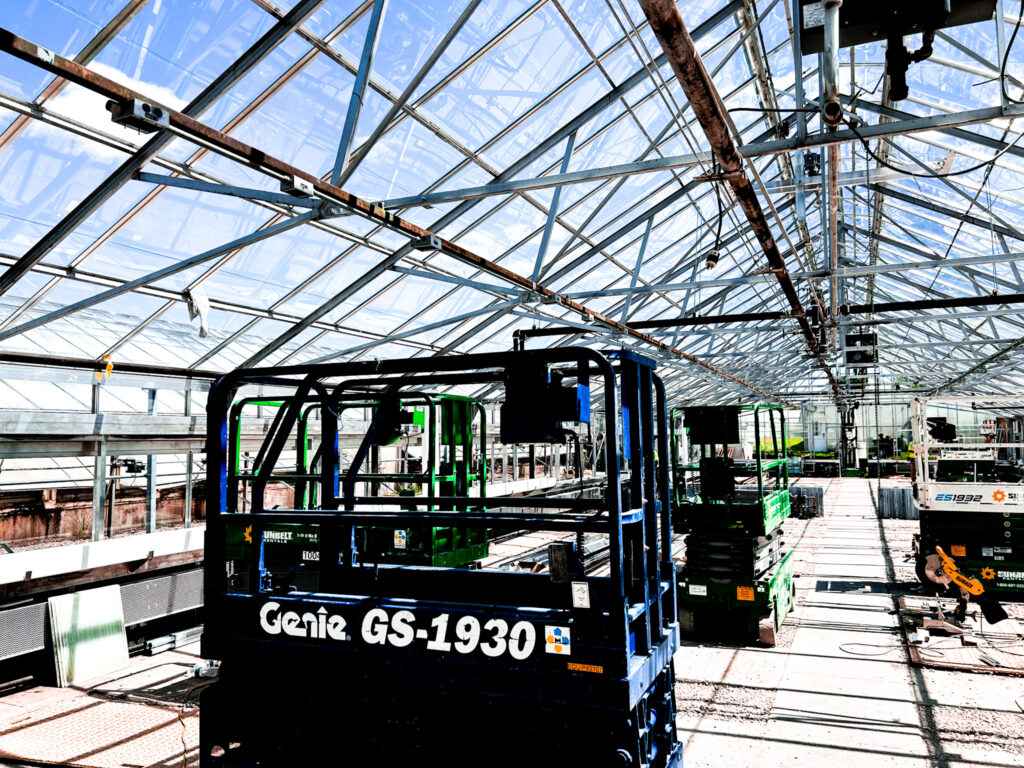
LLK is leading a major transformation of MSU’s Plant Science Greenhouses — an ambitious 85,000 sq ft overhaul blending strategic renovation with six brand-new structures. In a project this large, coordination is everything. LLK is providing demolition, full structural design-assist, and construction, including custom mechanical integration. We’re also working alongside architects and MSU facilities staff to make sure lifecycle cost assessments and spec alignment stay on track. This build proves that complexity doesn’t have to mean compromise.
Read more → Michigan State University Project
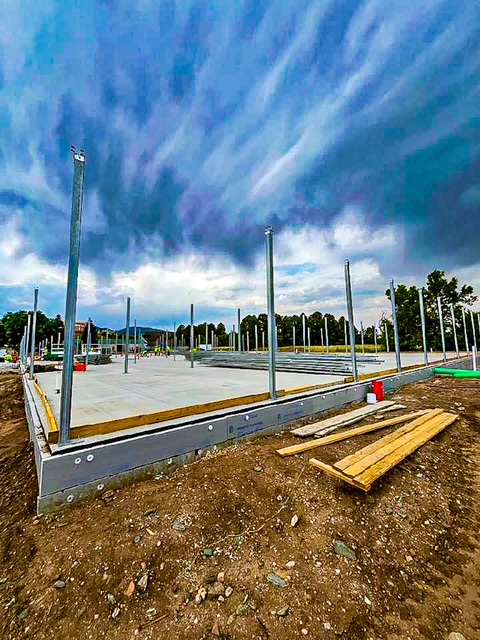
2. Colorado State University: Growing Tomorrow’s Forests
For CSU’s Colorado State Forest Service nursery, LLK delivered a 34,000 sq ft high-performance greenhouse and shadehouse complex, designed specifically to support forestry and conservation propagation. We managed everything from stamped greenhouse structure drawings to construction and mechanical integration. This build reflects a growing need in the research sector: scalable infrastructure that can support both biosecure plant production and community engagement.
Read more → Colorado State University Project
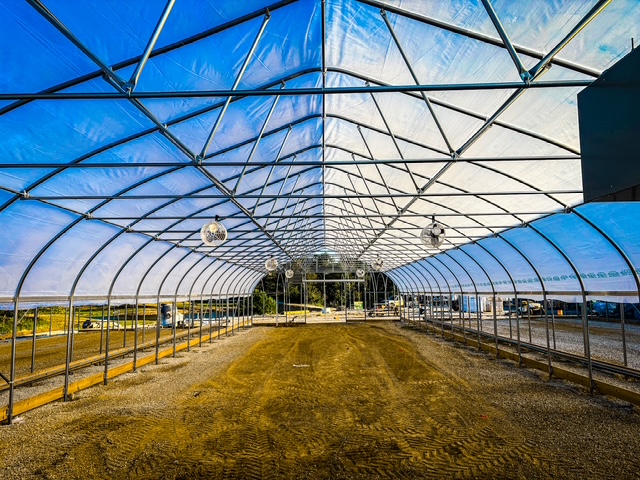
3. Jones Greenhouses & Berry Farm: Rebuilding for Resilience
After tornadoes devastated parts of northern Mississippi in early 2025, Jones Greenhouses & Berry Farm faced the urgent challenge of restoring production capacity. LLK’s response was not only to replace structures, but to design for better resilience. The new layout includes nine 35′ × 145′ Gothic stand-alone greenhouses and three 30′ × 95′ units, all outfitted with sliding doors, HAF fans, and efficient heating systems for reliable climate management. Construction is underway, and once complete, the farm will have an infrastructure platform stronger than what was lost.
Read More → Jones Greenhouses & Berry Farm Project
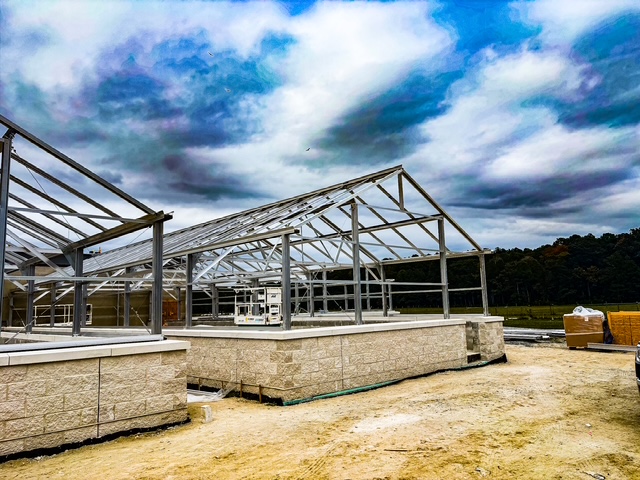
4. University of Maryland Eastern Shore: Building Biosecurity from Day One
UMES’s new greenhouse build was designed from the ground up with containment and climate control in mind. The gutter-connected Sun-Mate structures are outfitted with automated environmental controls, shading systems, and LED lighting — all forward-thinking infrastructure for applied ag research. While construction is still underway, this project reflects an increasing demand for integrated systems that minimize operational risks from the beginning.
Read more → University of Maryland Eastern Shore Project
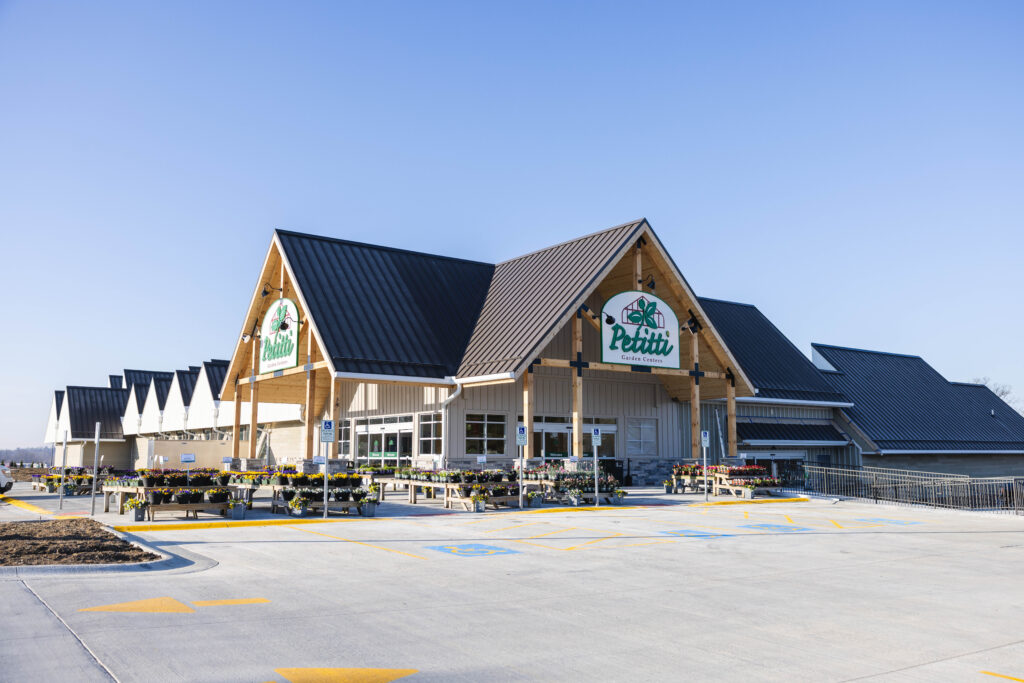
5. Pettiti’s Garden Center: Turning a Problem Site into a Destination
In Bath Township, OH, LLK partnered with Pettiti’s Garden Center on a bold new build designed to transform a challenging site into a retail and growing destination. The project included the greenhouse structures as well as critical site planning, grading, and drainage solutions to overcome the unique terrain. By pairing technical design with operational vision, LLK delivered a facility that works for both production and customer experience.
Read more → Pettiti’s Bath Township Project
Want to see more lessons from the field? Every project teaches something new. Follow LLK on LinkedIn and subscribe to our YouTube channel for project updates and in-depth educational pieces on greenhouse design and operations.
Every site is different, but the goal is the same — greenhouses built to perform for decades.
—
We’d love to help you write the next success story. Connect with our team of experts to develop a first-class, custom solution for your greenhouse needs:
Give us a call at 440-236-8332
Or reach out through our website with your project questions and details