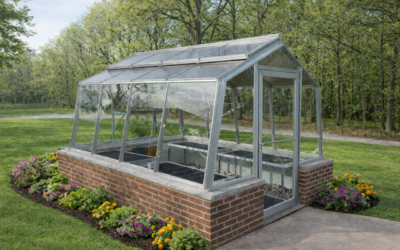
At Michigan State University’s Plant Science Research Greenhouses, a phased, $35+ million renovation and new build project is under way, a model for how long-term strategic thinking drives better outcomes for complex greenhouse operations.
More than 400 researchers rely on these facilities for everything from basic plant science to applied agriculture studies, with at least 100 different projects happening at any one time; all of Michigan’s commodity crops are represented within the facilities. Success here means balancing diverse operational needs, future-proofing infrastructure, and managing budgets, all while maintaining active research production.
At the helm of this project is Chrislyn Particka, who is the director of the research greenhouses. When she joined the institution in 2019, she inherited aging infrastructure, inconsistent environmental controls, and more than 60 faculty users whose research needs were not always being met due to the condition of the greenhouses.
In fact, just a few weeks into her tenure, she received an initial assessment of the facility. The report contained suggestions on how to renovate each greenhouse; there were no plans to tear down and rebuild any. Over time, however, Chrislyn and her colleagues were able to offer their ideas on how the plan could be adjusted to include tearing down and rebuilding the greenhouses, as some of the shortcomings of the greenhouses that limited research capability could not be corrected with renovations. “Luckily, we were eventually able to dream bigger,” Chrislyn said.
Over the next five years, she would lead the transformation of one of the nation’s most complex research greenhouse facilities, all while keeping operations running, with a lot of help from the other greenhouse staff members. Here’s what she learned.
Understanding the Unique Needs of Research Greenhouses
Unlike commercial greenhouses, research facilities like MSU’s serve dozens of different users simultaneously, who have a wide variety of needs. Tree research needs tall space, as one example, while pathology studies need precise environmental control to encourage disease development.
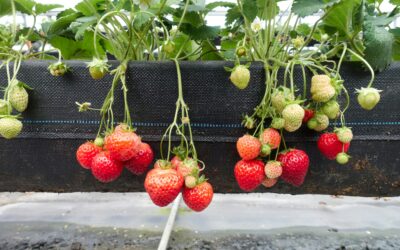
At MSU, 60–70 faculty are active in the facilities at any time, spanning eight academic departments across three Colleges (Agriculture and Natural Resources, Natural Science, and Engineering). The variety of research conducted includes crop breeding, herbicide resistance in weeds, how plants respond to and tolerate environmental stress, and development of photovoltaic glass and evaluating plant growth under it.
Lesson Learned: Design with compartmentalization first. Separate, individually controlled zones are essential. Operators should plan for isolated airflow, independent lighting, and autonomous environmental control systems to protect research integrity across a facility.
Recognizing the High Cost of Aging Infrastructure
Prior to renovation, many greenhouses had no computerized environmental controls, just independent thermostats triggering fans or heaters individually. Furthermore, 24-hour flat temperature setpoints were the norm — no day/night variation.
Vents were sometimes open while the heat was on, wasting energy and destabilizing the crop environment. Leaky or undersized evaporative cooling pads severely limited summer operation.
This issue at that point was that inconsistent temperatures created uneven crop development, even in research.
Lesson Learned: Operators must eliminate multiple, isolated control points that “fight” each other. Invest early in centralized environmental controls, even simple programmable logic controllers (PLCs)—to avoid this slow operational death spiral.
Install temperature and equipment overlay reporting: overlay vent status, fan speeds, and temperature readings to quickly diagnose system mismatches.
Timing Matters: A Snowstorm Sparks New Funding
In January 2021, a critical turning point occurred: a new university provost visited MSU’s greenhouses—on a slushy, sleeting day—and was snowed on inside a greenhouse.
That chance event spurred $4 million in funding from many sources at MSU. Over the next three summers, MSU used the funds to retrofit 41 zones with LED lighting and complete full renovations to 24 zones, including repairing floors, replacing old glass glazing with acrylic, and installing all new heating and cooling equipment along with Wadsworth Seed environmental control systems. Much of this work was done quickly and efficiently, using in-house staff, including the greenhouse staff electrician who managed the lighting installs.
But that was just the start of a capital stream that would change the course of Michigan State University’s greenhouses.
Lesson Learned: Always maintain an up-to-date, data-driven business case for investment. Have cost analyses, ROI projections, and operational risk assessments ready, because moments of opportunity can be unexpected and decisive.
And if your leadership sees facility failure firsthand, be prepared to immediately present your funding case.
Practical Lessons from MSU: Building with the Future in Mind
By July 2022, the State of Michigan approved $23 million in capital funding to overhaul the greenhouse complex. MSU also allocated an additional $12 million. Chrislyn and her colleagues had used the time between 2019 and 2022 to clarify which greenhouses needed to be torn down, which could be renovated, and what the future layout should look like. Now, they had an idea of how to allocate this new money.
The key was to start with the end in mind. What were the ultimate goals of these greenhouses?
Every design and engineering decision at MSU focused on long-term operational benefits, not just short-term construction costs.
Here’s how they did it:
1. Corridor-Entry Only Design
Among the first non-negotiables was access. In the legacy houses, researchers would often have to pass through one greenhouse to reach another, an operational nightmare.
“If we had to spray pesticides in 16A, then we’d have to block off 16B too,” Chrislyn said, “even if a totally different group was using it. There is also a greater risk of spreading pests from one zone to another with walk-through houses.”
Instead of pass-through designs, all new greenhouses use corridor-only entries.
North-facing corridor entries open south into individual greenhouse zones. This eliminates cross-traffic, minimizing pest transfer and pesticide exposure risks, and also facilitates containment protocols for regulated pathogen trials.
Lesson Learned: Biosecurity-first designs are now standard in research greenhouse design. Operators working with sensitive crops or multiple commercial clients should mirror this layout to protect crop integrity and worker safety.
2. Taller Greenhouses, Better Climate Control
The second major upgrade was height. Most of the old houses had sidewalls barely seven feet tall, with peak heights around 16 feet. It made growing tall species—corn, energy sorghum—difficult. It also trapped heat close to the plants.
“Taller greenhouses manage heat better in the summer,” Chrislyn explained. “You want that hot air pooling higher, away from the crop.”
To achieve this goal, new greenhouses feature 13-foot sidewalls and 21-foot peaks.
This expanded vertical space supports those tall crops without mechanical pruning. It also vastly improved heat stratification, reducing crop stress and energy costs.
Even in commercial greenhouses, increasing vertical space improves climate stability and reduces cooling loads. Consider 10+ foot sidewalls even for production houses focused on bedding plants or ornamentals.
Then came shade curtains. Previously, staff would laboriously apply whitewash each spring—a tedious, weather-dependent process. The new curtains automated that work, providing not just summer shading but also winter insulation.
“It’s a massive time, energy and labor savings,” she said. “We do our best to make ‘whitewash day’ fun, but it’s still a lot of work!”
3. Modernized Climate Control Systems
Wadsworth Seed control systems are deployed across all renovated and new structures. This allows for independent zone programming for lighting, vents, temperature, as well as real-time data overlays for fast troubleshooting.
Think of the future, too: The control systems at MSU now offer pre-built expansion capacity for future misting, additional sensors, or custom research equipment.
Lesson Learned: Future-proof your control panels during initial install. Always leave 20–30% spare capacity for add-ons. Retrofitting control panels later is exponentially more expensive.
4. Zone-Based Layouts for Maximum Flexibility
Instead of fewer large zones, each new greenhouse is subdivided into multiple smaller zones (four to nine per structure). This supports small plot studies without excessive space waste and enables stricter pest and climate isolation. At a place like MSU, with so many faculty and students moving in and out of the greenhouse space, this provides more flexibility to better meet the researchers’ needs.
Lesson Learned: Sub-zoning is a critical efficiency model even for production-focused growers: it allows side-by-side growing strategies and reduces energy costs by targeting conditions only where needed.
Managing Budgets, Inflation, and Hard Choices
In summer 2023, MSU completed those renovations on the 24 greenhouse zones previously updated with emergency funding—leveraging leftover budget and a supplemental internal investment.
On April 12, 2023, the university held its official groundbreaking ceremony for the state-funded portion of the project. Demolition began in earnest on May 6, starting with the three oldest greenhouses on campus. In their place, a new headhouse and one new greenhouse were constructed. Another new greenhouse was built on the site of a former structure that was demolished in 2020. Renovations of two other greenhouses were also completed during this first phase, which wrapped up in early 2025.
If that sounds like a lot to manage from a budgetary standpoint, it was.
Post-COVID inflation and labor shortages hit hard as this project ramped up.
MSU faced significant cost escalations compared to early estimates and value-engineering reductions including cutting one full new greenhouse and one major renovation. The team had to eliminate high-cost equipment like autoclaves from the build.
Lesson Learned: Build projects with structured decision-making frameworks before budget cuts happen. Pre-define mission-critical elements (“must-haves”) versus secondary elements (“nice-to-haves”)—so hard choices protect operational priorities.
Operational Flexibility: Planning for the “Musical Greenhouses” Phase
Because construction was phased, MSU faced a giant logistical puzzle: greenhouse users had to be moved—sometimes repeatedly—as greenhouses were renovated or demolished and rebuilt, without interrupting research projects.
The keys to this transition?
- Planning relocation several months in advance.
- Knowing an individual researcher’s needs intimately (temperature and light requirements and pest management needs).
- Offering researchers pre-identified alternate spaces before disruption occurred.
Lesson Learned: Every phased construction project needs an internal relocation master plan as detailed as the construction plan itself.
Greenhouse operators pursuing renovations while remaining active must treat user relocation like a standalone workstream, with the same level of foresight, stakeholder engagement, and precision as the facility construction itself.
Setting the Facility Up for Long-Term Maintenance
Crucially, MSU embedded maintenance crews into commissioning and system training—a step often missed.
If maintenance teams aren’t trained on day one, even the best-engineered systems will eventually fail.
Lesson Learned: Operators should insist on full documentation (as-builts, specs, warranties) and live system walkthroughs and as well as internally scheduled preventative maintenance programs. Involve management and maintenance technicians in the commissioning and training processes.
Flexibility, Readiness, and Strategic Vision
Phase 2 of this project began in 2025 with the demolition of two small greenhouses. A new greenhouse is currently under construction on that footprint and is expected to open in August. Another new greenhouse will be built at the site of the old headhouse after it is demolished during the summer, and will open in January 2026. There’s still a ways to go, but with the ending in mind, each step along the way is as clear as possible.
Following Phase 2, the final leg of the project will involve the removal of two additional greenhouses, though only one new greenhouse will be constructed to replace them—due to space constraints and earlier budget trade-offs.
Through this phased, multi-year process, Chrislyn emphasized that long-term relocation planning was the most critical—and most underestimated—element of success that was solely her responsibility. Every move required strategic reshuffling, with entire research programs relocated more than once to accommodate demolition schedules. Despite delays created by COVID, the extra time ultimately gave MSU the clarity to make decisions that prioritize infrastructure that supports high-throughput research, long-term maintainability, and true operational flexibility.
Michigan State University’s greenhouse modernization is proof that strategic vision, operational discipline, and data-driven flexibility drive success.
By starting with the end in mind—operational needs, research flexibility, maintenance realities—MSU has positioned its greenhouse facilities not just for 2025, but for 2045 and beyond.
For greenhouse operators across education, agriculture, and controlled environment production: future-proofing begins with design, but succeeds with discipline.
Start with the end in mind, and be ready when the snow comes through the roof.