Project Everberry was founded on the idea that strawberries should be able to grow closer to the people who eat them.
“People love strawberries,” says Shawn Cutter, CEO and founder of EnergiAcres, the energy infrastructure company helping shape the model behind the project. “If you’ve ever bit into a strawberry that has no flavor, your brain knows that something is wrong immediately.”
The reason tasteless strawberries exist today, Cutter says, is because they travel too far. Not only do food miles—the total distance food travels from the farm to the final consumer—contribute to food waste, but they also contribute to wasted energy from transportation.
Greenhouses and vertical farms can help solve the distance problem, but they come with a different challenge: energy. Replacing the sun, managing humidity, and producing year-round food indoors takes significant power and thermal control.
EnergiAcres aims to solve both problems by connecting energy infrastructure, data centers, and controlled environment agriculture (CEA), creating food hubs that reduce energy consumption while reconnecting people with locally grown food.
How it Works
Project Everberry began by looking at places where energy, land, and local food needs could come together. In Appalachia and the surrounding region, many communities sit near natural gas assets, industrial infrastructure, universities, and food networks, but those assets are rarely designed as one integrated system.
EnergiAcres sees an opportunity to change that. A data center campus requires reliable power. Power generation produces heat, and in some cases carbon dioxide streams that can be captured, reused, or managed. Greenhouses require heat, carbon dioxide enrichment, water management, and stable energy. When these systems are planned together, the waste stream from one use can become an input for another.
That is the core idea behind Project Everberry: use energy more than once. Compute first. Grow food with the recoverable energy. Build visible local benefits around infrastructure that would otherwise be judged only by megawatts, emissions, and utility constraints.
Project Everberry is not a one-time project that ends when a single grant, greenhouse, or site is completed. It is an enduring concept and operating model for EnergiAcres: a repeatable way to connect energy, food, water, education, workforce development, and community benefit wherever the right conditions exist.
The planning grant for Project Everberry is underway. That planning work is being used to refine the first deployable versions of the model, clarify partner roles, size facilities appropriately, and establish a framework that can be reused across future EnergiAcres campuses.
Here are the main components needed to make Project Everberry work:
- A location that makes local food production viable. The project currently has roots in Pennsylvania, Ohio, West Virginia and the broader Appalachian region.
- Energy infrastructure. Sites need access to reliable energy sources and the ability to capture or reuse heat from power generation, industrial operations, or data center infrastructure—this heats the greenhouse next door.
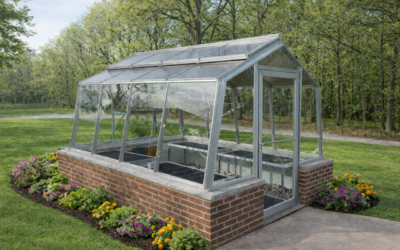
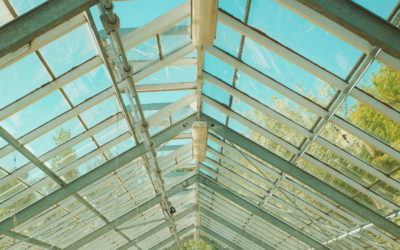
- CEA. Greenhouses or other growing structures are needed to produce fresh food year-round.
- Academic and community partners. The Ohio State University, Penn State University, West Virginia University, West Liberty University, LLK Greenhouse Solutions, Grow Ohio Valley, Food Helpers, Oglebay, CNX, and other partners each support different parts of the model.
- A real market. Fresh produce must have a local pathway to consumers, schools, institutions, resorts, food hubs, food banks, or community distribution channels.
By focusing on strawberries specifically, a fruit that is always in high demand, food waste isn’t a primary concern for Project Everberry.
The choice of what to grow was just as intentional as the infrastructure behind it.
The Case for Strawberries
Strawberries are a natural choice for several reasons: They’re in demand, they aren’t typically locally grown, and they create happiness.
“We wanted a crop people could identify with,” Cutter says. “Strawberries are tangible, nutritious, and they make people happy. They give people a reason to care about the system behind the food.”
Strawberries also work as a public-facing story. Lettuce has become the default indoor-farming crop, but it does not carry the same emotional weight. A better strawberry is easy to understand. It lets people see, taste, and remember why local production matters.
Project Everberry isn’t just solving a logistics problem. According to the USA Regenerative Agricultural Alliance, Inc., strawberries are linked to lower stress and a sustained sense of optimism. This makes them an especially meaningful crop for communities like Appalachia, where food insecurity rates average 13%.
But before he could start growing strawberries locally, Cutter needed to partner with different organizations for support. Each organization plays a different role, and each one is critical.
Cultivating Partnerships
There are more than 10 organizations involved in the project, and they fall into four distinct categories.
- Circular energy models: EnergiAcres and energy partners help define how power generation, data centers, waste heat, and greenhouse loads can work together.
- Agritourism: Grow Ohio Valley, Oglebay, Food Helpers, and the Appalachian Center for Economic Networks (ACNet) reconnect people to locally grown food.
- Research and education: OSU, WVU, PSU, and West Liberty University have a targeted set of specifications for the project that ties back to research and data components. PSU, for instance, is focused on energy optimization, ensuring the greenhouses reach the efficiency levels Project Everberry is aiming for.
- Design: LLK Greenhouse Solutions supports greenhouse planning, design, and practical decision-making so the facilities are right-sized and buildable.
The partner network matters because Project Everberry is not just an agricultural project. It is an integrated infrastructure model. A greenhouse by itself is useful. A data center by itself is powerful. But a data center, power system, greenhouse, food hub, education platform, and workforce program designed together can create a regional model that is far more valuable than any single asset.
Planning, Funding, and the Next Phase of Project Everberry
Project Everberry is currently in its planning phase. The ARISE planning grant is underway, with partner contributions and technical work being used to define the sites, scopes, operating model, and implementation pathway.
The next major funding objective is an ARISE Implementation Grant, which would support deployment of the first physical facilities and programs. The first funded facilities may launch in phases, but Project Everberry itself is an enduring EnergiAcres concept: a living model for turning energy infrastructure into community-visible food, education, and resilience assets.
EnergiAcres intends to bake this circular model into its broader “energy from data centers for food” platform. In practice, that means future EnergiAcres campuses should be evaluated not only for power, fiber, land, and data center readiness, but also for their ability to reuse heat, support CEA, create local food pathways, and provide measurable public benefit.
The long-term aim is simple: build energy infrastructure that does more than power servers. Use the same energy platform to grow food, strengthen communities, train workers, and make sustainability visible.
In the end, Project Everberry is about a strawberry that actually tastes like one, grown close to home. But the deeper idea is larger than strawberries: It’s a model for using energy twice and building infrastructure that gives back to the community.