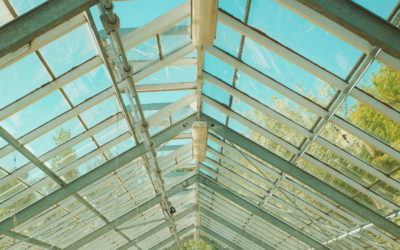
Walk the grounds of almost any major university, botanical garden, or historic estate, and there’s a good chance you’ll find one: a glass greenhouse with the quiet authority of a building that has outlasted generations of students, gardeners, and groundskeepers. Chances are equally good that it’s a Lord & Burnham.
For more than 150 years, Lord & Burnham was the defining name in American greenhouse manufacturing, a company whose structures became synonymous with institutional horticulture, scientific research, and, at the upper end of the residential market, a particular kind of cultivated ambition.
But for roughly a decade, owners of these structures—and the contractors responsible for maintaining them—were largely on their own. The company had gone dormant. Parts had dried up. And a generation of greenhouse installers had quietly begun hoarding old stock, collecting decommissioned structures just to keep their clients’ buildings running.
That supply gap has now been closed. And for institutional clients, commercial growers, and restoration-minded owners across the country, it’s changing what’s possible.
A Century and a Half of Greenhouse History
Lord & Burnham’s legacy is difficult to overstate. The company essentially pioneered the modern commercial greenhouse, and its structures can be found at institutions ranging from Ivy League universities to municipal conservatories to private estates. Their Blue Ribbon scissor-truss houses became a staple of school and college horticulture programs throughout the mid-20th century.
When the company eventually went dormant, the ripple effects were significant. A supply chain that had served tens of thousands of structures across the country simply stopped. Contractors and facilities managers who needed glass panels, ridge vents, extrusion components, or bar caps had nowhere to turn. Some improvised. Others watched their structures decline.
The problem was compounded by the complexity of the installed base. Lord & Burnham hadn’t operated in isolation; over the decades, the company had absorbed competitors including Lawton and Hitchings, and its extrusion systems had influenced the designs of other manufacturers, such as Janco and National. The result was a landscape of hybrid structures: a Lord & Burnham frame with Lawton-bent glass, or a Hitchings house retrofitted with Lord & Burnham bar caps. Identifying the right parts, let alone sourcing them, had become something of a detective exercise.
The Arcadia GlassHouse Acquisition: Bringing the Dies Back Online
About eight years ago, the owners of Arcadia GlassHouse, an Ohio-based manufacturer,acquired the dormant residential assets of Lord & Burnham: the original tooling, drawings, and extrusion dies. The assets had been sitting with a retiring owner who had neither the capacity to maintain them nor the inclination to continue the business.
Getting them operational was a project in itself. Shane McKee, who joined Arcadia GlassHouse in the acquisition’s first year, spent that initial period inventorying and repairing equipment, working through dies and machinery without complete documentation of what each one produced. “Every day was a surprise,” McKee recalls. “Every day was trying to figure out something new.”
What emerged from that process was a manufacturing capability that goes well beyond what most in the industry realized was possible. Arcadia GlassHouse can now produce bent glass in standard and custom sizes, laminated glass (including 1/8-inch laminated, which few contractors even knew existed), ridge vent systems, extrusion components, and a growing range of parts that serve not only Lord & Burnham structures but the broader family of legacy greenhouse brands whose designs shared the same extrusion lineage.
“We can pretty much take almost any older house in any condition and find a way to fulfill that whole project with minimal hiccups,” McKee said.
How LLK and Arcadia GlassHouse Work Together
The LLK–Arcadia GlassHouse relationship began, as many productive partnerships do, with an emergency. Anthony Hill of LLK needed a curved glass piece for a Lord & Burnham structure and reached out to Arcadia GlassHouse on a long shot. The piece was available. And the conversation that followed opened up a much larger scope of collaboration.
Today, the two companies operate as complementary partners on legacy greenhouse projects. Arcadia GlassHouse supplies the specialized parts—glass, extrusions, vent systems—that no one else can reliably source. LLK provides the assessment, scoping, and installation expertise to put those parts to work. Project referrals flow in both directions: Arcadia GlassHouse connects owners with LLK for structures that need installation support; LLK brings Arcadia GlassHouse in wherever legacy parts are required.
The collaboration has extended to sites including Cornell University and Detroit’s Belle Isle conservatory, a joint bid that required sourcing multiple radius glass specifications for one of the region’s most visible historic structures.
The Institutional Case for Repair
For owners of legacy greenhouse structures—particularly colleges, universities, and municipal parks departments—the arithmetic of repair versus replacement has always tilted heavily toward repair, for one simple reason: replacement budgets rarely get approved.
“For them to request a new greenhouse is almost always a no,” McKee explains. “They get to the point where they have the thought, but they know it’s never going to happen.” What does get approved, year after year, is the smaller capital expenditure: fix the ridge vents, replace the broken glass panels, address the failing sections while leaving the rest for the next budget cycle.
That phased approach, necessary for most institutional clients, only works when parts are available. Lakeland Community College, a local example McKee cites directly, has maintained its Lord & Burnham structures on a rolling basis: reglazing one half of a roof, returning two years later for the other half, then addressing the vents in a subsequent cycle. It’s a long game, but it’s a game that can now actually be played.
For LLK, this represents a meaningful service opportunity. Institutional clients with aging glass greenhouses are often excellent long-term partners: their structures require ongoing maintenance, their capital cycles are predictable, and their need for trusted contractors who understand the complexity of legacy systems is genuinely acute.
What to Look for in an Aging Glass Greenhouse
Not every aging greenhouse is a candidate for restoration, but many more are viable than their owners realize. A few of the most common repair needs in Lord & Burnham and related legacy structures:
Glass replacement. Many structures built before tempered glass became standard are still glazed with single- or double-strength glass, a safety issue that owners often don’t recognize until breakage occurs. Replacement with appropriate modern glass is frequently the most urgent intervention.
Ridge vent systems. Original wood ridge vents are prone to rot and are highly vulnerable to wind events. Replacement with modern aluminum systems is one of the most common and highest-impact repairs in Lord & Burnham restoration work.
Extrusion and bar cap damage. Frame components that were previously impossible to source can now be manufactured to original specifications, allowing structural integrity to be restored without full replacement.
Hybrid structure complexity. Structures that combine elements from multiple legacy manufacturers (Lord & Burnham, Lawton, Hitchings, Janco) require careful identification before sourcing. An experienced partner can navigate this complexity and identify solutions that work across the full system.
The Bottom Line
Legacy glass greenhouses represent a category of structure that, for a decade, existed in a kind of institutional limbo: too historically significant and structurally sound to tear down, but too difficult to maintain without parts. That limbo is over.
The availability of Lord & Burnham components—and the broader network of expertise that has developed around legacy greenhouse restoration—means that owners who have been deferring action now have a viable path forward. Whether the need is a single emergency repair or a multi-phase restoration program, the tools and the expertise to execute it exist.
If you’re managing a legacy glass greenhouse structure and wondering what your options look like, LLK can help you think through the assessment, the sequencing, and the scope. The structure you’ve been maintaining may have more useful life in it than you think.
LLK Greenhouse Solutions works with institutional and commercial clients across the region on legacy greenhouse assessment, repair, and renovation. Contact our team to schedule a consultation.