Incorporating accessibility and compliance into greenhouse design is a requirement in the U.S., under the Americans with Disabilities Act and certain state laws. It’s a multifaceted process that enhances accessibility for all workers in the greenhouse.
When working with the design partner on a given greenhouse project, there are four stages that are most important to address along the way.
Initial Assessment and Planning
The early stages of a greenhouse design are all about communication.
Operations teams and design partners should engage ADA specialists and, importantly, individuals with disabilities in the initial planning phase. Their insights can help tailor the design to meet specific needs that might not be immediately obvious to someone without their experience.
Because the initial planning phase should place all possible options on the table (allowing operators to then scale back as needed for financial or commercial reasons), these engagements should address all possible accessibility topics. We’ll get into some specific issues below, but examples that might come out of these early conversations include pathway/walkway materials, storage area accessibility, emergency features, and employee break areas.
This concept is similar to value engineering, wherein costs are reduced to meet specific needs (with an eye toward future expansion of a given project).
Because ADA compliance is inherently about accessibility, initial planning should revolve around the ways to get the most use out of a specific space in the greenhouse. Begin considering ingress and egress, as well as the actual flow of human workers and plants through the facility.
Input from wheelchair users could help determine the optimal range of adjustable heights for workstations and benches to ensure comfort and accessibility for both seated and standing gardeners. Suggestions from individuals of varying heights can inform the design of work surfaces that adjust easily and can accommodate everyone from tall standing workers to those working from a seated position.
Customization is helpful throughout the project.
Design and Layout
Here’s where early conversations turn into action.
Let’s begin at the doorways to the facility. The design of entrances and exits is foundational to creating an accessible greenhouse.
All doorways should be at least 36 inches wide to comfortably accommodate wheelchair access. Consider the installation of automatic door systems to facilitate easy and independent entry and exit for individuals with disabilities.
For any elevation changes, incorporate ramps with a gentle incline, adhering to the ADA-recommended slope ratio of 1:12. These ramps should have non-slip surfaces to ensure safety and usability under all weather conditions.
Once inside the greenhouse, choosing the right flooring material is essential for both safety and mobility.
Opt for non-slip, smooth surfaces that can support heavy traffic and are resistant to wear. These materials should facilitate movement of wheelchairs and other mobility aids without creating barriers. Additionally, integrate sufficient drainage systems within the flooring design to prevent water accumulation, which can be a major hazard, particularly in a humid greenhouse environment.
The internal layout of the greenhouse should be strategically planned to ensure clear, wide pathways that allow for easy navigation.
A minimum pathway width of 48 inches is recommended to provide ample space for wheelchairs to pass through comfortably and to facilitate the movement of carts and other gardening equipment. Carefully consider the placement of plants and equipment to maintain these clear routes and avoid creating areas that could lead to congestion or accessibility challenges.
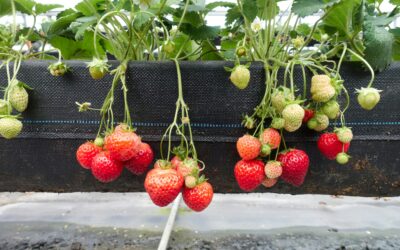
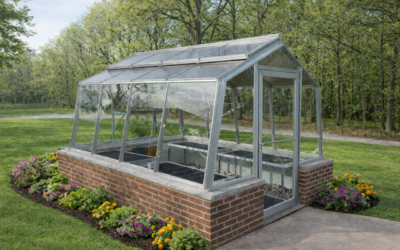
Adapt planting areas to be accessible for all users. Raised beds and accessible planter boxes should be constructed at various heights so that individuals in wheelchairs or those who have difficulty bending can easily reach them.
Incorporating vertical gardening elements can also enhance accessibility by bringing plants up to a more manageable level, making maintenance tasks like pruning, watering, and harvesting more ergonomic.
Workstations within the greenhouse should cater to both seated and standing workers. Implement adjustable-height surfaces that can be modified easily to suit individual needs, with heights ranging typically from 28 to 34 inches for seated positions, and up to 44 inches for standing work.
These workstations should also have open space underneath to accommodate wheelchair users, ensuring that every employee has the opportunity to work comfortably and efficiently.
Mobile benches or adjustable-height beds are crucial for allowing access from a wheelchair. These should be designed to be height-adjustable, either manually or through powered mechanisms, to suit the needs of various users. Pathway-width considerations should be made for the movement of specialized equipment, ensuring that there is ample space for maneuverability within the greenhouse.
Signage and Communication
Signage about accessibility features should use large, clear fonts with high contrast between text and background to enhance readability for individuals with visual impairments.
Place signs at decision points like entrances, restrooms, and emergency exits to guide navigation. Ensure that signage for identifying different plant sections or tools is positioned at eye level or can be easily read from a seated position. Consistency in where signs are placed helps individuals with visual impairments navigate more confidently and safely. For example, always placing door signs at the same height and side can significantly enhance navigability.
Ask for staff feedback, too. Are workers unsure of certain accessibility characteristics of the greenhouse? Are they not implementing equipment or processes in the proper way?
Team meetings can be a helpful touch point to go over important information like that. Regular training sessions for staff can help them understand how to use and communicate through these signage and assistive tools effectively. Training should also cover how to assist visitors and colleagues with disabilities in navigating and using the greenhouse facilities.
Monitoring and Feedback
Once you’re operational, set specific metrics to measure the effectiveness of accessibility features, such as user satisfaction or frequency of use, and regularly review these metrics. This approach helps identify successful initiatives and areas needing improvement.
Certainly, you’re going to be monitoring the performance of your crops and your staff: that’s your core business. But these accessibility features are just as important to the long-term success of your greenhouse operation.
Periodically evaluate the greenhouse’s accessibility with comprehensive audits that cover all aspects such as entryways, pathways, and workstations. It’s beneficial to employ external ADA compliance experts for these audits to ensure impartiality and professionalism. You can partner with disability advocacy groups to gain insights into effective accessibility practices and keep abreast of the latest standards and technologies.
Involvement of these groups in planning and feedback processes ensures that accessibility measures are robust and up-to-date.
Sign up for the LLK Greenhouse Solutions newsletter below >>>